Welcome to the Python for Network Engineers course — a practical introduction to Python through the eyes of a network engineer. This course teaches you the core Python concepts you need for network automation, using familiar examples such as routers, switches, interfaces, IP addresses, configurations, and device inventories.
Instead of learning Python as a generic programming language, you’ll learn it in the context of real networking tasks. You’ll write simple scripts, build small tools, process device data, generate configurations, and understand how Python can help you automate repetitive work in modern networks.
About
The Python for Network Engineers course helps you build a solid foundation in Python by connecting every important programming idea to something you already understand from networking. You’ll learn variables, data types, conditions, loops, functions, files, modules, and error handling by working with network-related examples.
You’ll also learn how Python fits into the larger network automation picture. The course explains how scripts interact with the operating system, how libraries extend Python, and how tools like Netmiko can be used to connect to network devices, collect output, and automate simple operational tasks.
What you'll learn
- Understand Python fundamentals: Learn variables, strings, numbers, lists, dictionaries, conditions, loops, and functions using clear network-focused examples.
- Think like a network automation engineer: See how Python can represent routers, switches, interfaces, IP addresses, VLANs, routes, and configuration data.
- Work with files and device data: Read inventory files, process command output, generate configuration snippets, and save results to text files.
- Automate real network tasks: Build simple scripts for ping checks, configuration generation, device inventory processing, and SSH-based device interaction.
Skills you'll gain
Who is this for?
Designed for network engineers, CCNA/CCNP students, and automation beginners who want to learn Python in a practical networking context. No previous programming experience is required, but basic networking knowledge will help you understand the examples faster.
Course Info
- Learning Path: Network Automation Fundamentals
- Exam: CCNA Automation / DevNet Associate Foundation
- Prerequisites: Basic networking knowledge
- Number of lessons: 25
- Number of labs: 8 practical Python labs
- Created: 3 Jul 2026
- Updated: 3 Jul 2026
Course Structure
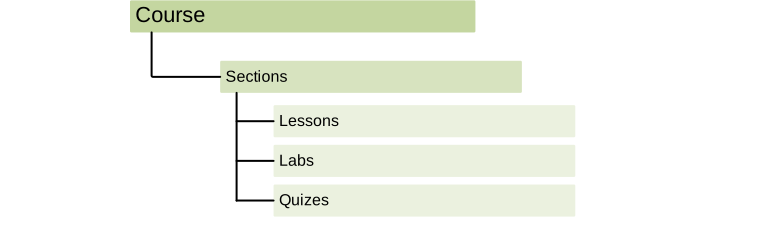
The course is organized into several practical sections that take you from your first Python script to simple network automation workflows:
- Section 1: Python Foundations — Learn what Python is, how code is executed, and how to write your first simple programs using variables, strings, numbers, and basic input/output.
- Section 2: Working with Network Data — Use lists, dictionaries, conditions, and loops to model routers, switches, interfaces, IP addresses, VLANs, and device inventories.
- Section 3: Functions, Files, and Reusable Code — Organize your scripts into functions, read and write files, handle errors, and start building small tools that can be reused in daily network operations.
- Section 4: Introduction to Network Automation — Use Python libraries to connect to devices, collect command output, generate configurations, and understand how automation tools fit into real network environments.
Each section includes short explanations, simple examples, and hands-on labs. The goal is not just to teach Python syntax, but to help you understand how Python can solve real problems that network engineers face every day.
By completing this course, you’ll be ready to continue with more advanced automation topics such as data formats, APIs, RESTCONF, NETCONF, Ansible, and Python-based network device management.
Outcomes
After completing this course, you’ll be able to read and write basic Python scripts with confidence. You’ll understand the most important Python building blocks and how they apply to real networking tasks such as processing device lists, checking values, generating configurations, and working with command output.
You’ll also gain the foundation needed to move from manual network operations toward automation. This course is your first practical step toward becoming a network automation engineer.