System Logging (Syslog)
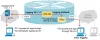
When an event happens on a device, the device immediately tries to notify the network team with detailed messages. Such messages are commonly called logs or syslogs.
This lesson begins our journey to learning the different device management protocols. We discuss accessing a Cisco device through the local console port and the different console types and cables.
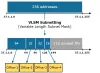
To understand what Variable Length Subnet Masking (VLSM) is, let's go through a business example. Suppose a company has bought the IP address range 37.1.1.0/24 (256 addresses). The company has 5 offices, as shown in figure 1 below:
In the previous two lessons, we have seen how to find the subnet ID and the broadcast address of a given IP/mask. If you have done most practice examples, you probably noticed that certain patterns repeat themselves.
This section ends with a Quiz that is designed to give you feedback on your progress. If you have a low score, consider retaking all lessons in this section. If you pass with a high score, go to the next section and continue toward achieving your goal.
The quiz takes only 5 minutes! Good Luck!
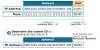
Understanding the Subnet ID concept (also called the Network ID) is essential for network administrators, as it is used almost everywhere within the networking realm. For example, routing tables show the routes based on subnet id and mask.

This lesson explains what IP subnetting is through a visual example. Suppose a company has a block of 256 public IP addresses provided by the local service provider.
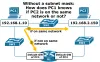
In the first lesson of this course, we saw why we need subnetting in the first place. In this lesson, we will see why we need the netmask and its role in the subnetting process.
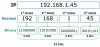
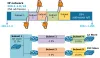
In this lesson, we will begin our discussion on IPv4 addressing and subnetting. We will see why we need to subdivide classful IP networks into subnets.